
Articles
FeaturedThe Problem Is The Point
This is the first article published on BOREAXIS and the first article I’ve ever written. It felt right to start with the reason this entire project exists: my obsession with long-range shooting, the constant problem-solving that keeps pulling me deeper into it, and my belief that serious shooters deserve better tools and better information without everything being locked behind another subscription. *The Problem Is the Point* is where that story begins.
Published August 26, 2026
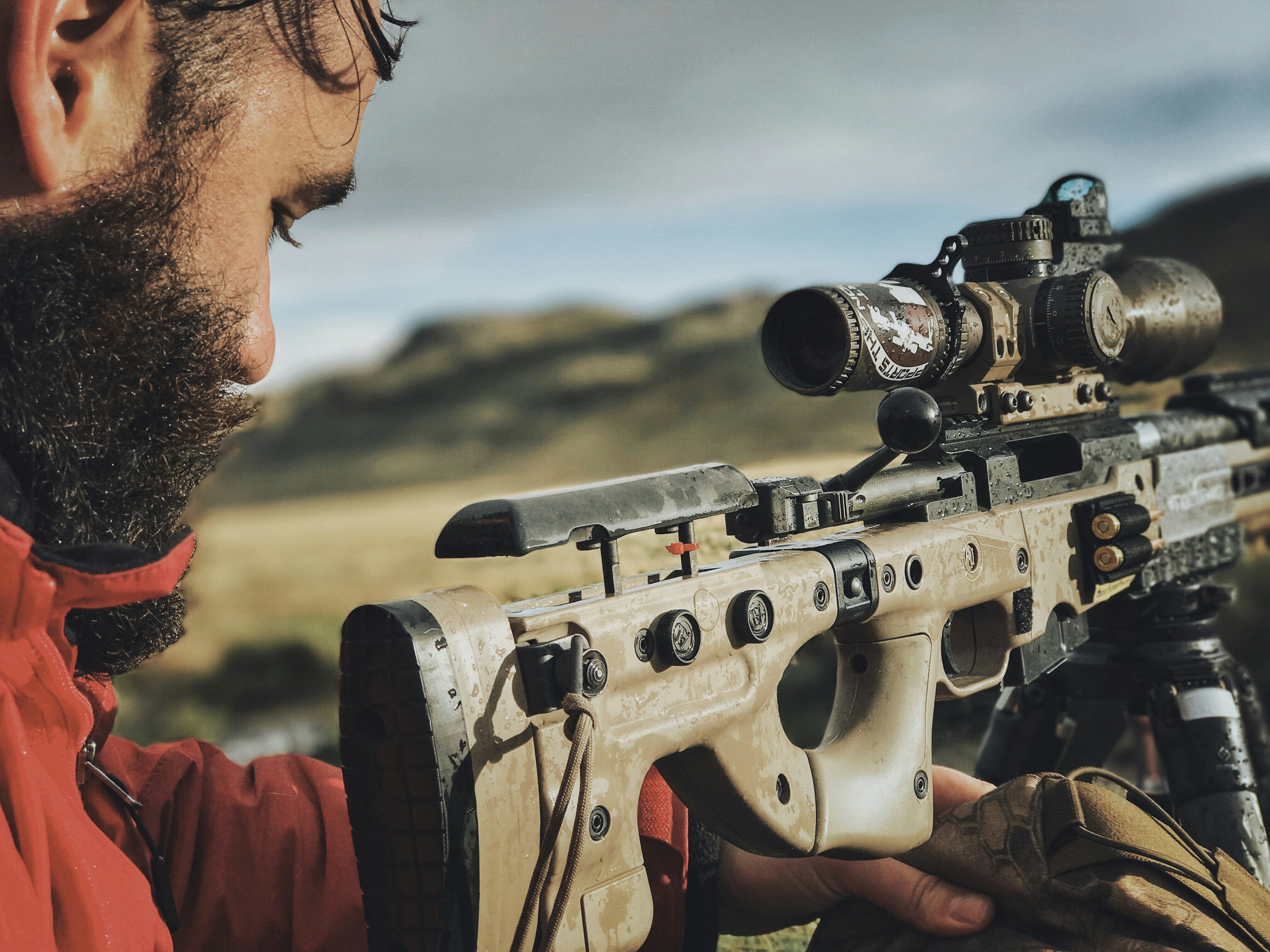
There is a strange amount of time between pulling the trigger on a long-range shot and finding out whether you were right. The rifle recoils into your shoulder, the bullet leaves the muzzle, and for that brief stretch of time there is nothing left to adjust, calculate, explain or second-guess. Everything you believed about that shot is already moving downrange. Your zero, muzzle velocity, elevation correction, wind call, ammunition, the weather, the rifle and whatever skill you brought to the firing line have all been reduced to a single experiment traveling through air you cannot see. Then the target moves. A little later the sound comes back, that unmistakable report of a bullet meeting steel hundreds of yards away, and for a moment the prediction you made and the physical world have agreed with each other.
I thought that distant impact would be what made me love long-range shooting. It is certainly satisfying, and I don't think that sound will ever get old, but somewhere along the way I realized the impact itself wasn't the part holding my attention. It was everything that had to happen before it. I became fascinated with how many small things had to be understood well enough, measured accurately enough or estimated intelligently enough to put a bullet where I wanted it to go. More than anything, I became fascinated with what happened when it didn't.
A miss at distance is different once you stop treating it as simply a failure. The bullet landed somewhere, and there was a reason it landed there. Maybe the wind was stronger downrange than it appeared from the shooting position. Maybe the velocity entered into the ballistic calculator wasn't as representative as I thought. Maybe the zero wasn't quite as perfect as I believed it was. Maybe the ammunition was behaving differently, the atmosphere had changed, the rifle had been disturbed or my own fundamentals had fallen apart during the shot. Most likely the answer was hiding somewhere inside a combination of those things. Finding it meant paying attention, looking at the evidence, changing something and trying again.
That process scratches an itch in my brain that very few hobbies ever have. I've always enjoyed troubleshooting things, particularly problems that don't immediately tell you what is wrong. Long-range shooting is almost perfectly designed for that kind of mind because the problem never stays completely solved. You can gather excellent data, build a ballistic profile you trust and leave the range feeling like you understand your rifle, only to return under different conditions and discover another variable waiting for you. Instead of making the sport frustrating, that uncertainty is what made me want to go deeper.
When people first look at long-range shooting, bullet drop seems like the great mystery. Then you spend enough time around it and realize gravity is one of the nicer things you have to deal with because at least gravity is predictable. The wind is less cooperative. It moves across terrain you can't always reach or measure, changes direction, changes speed and may be doing something completely different halfway to the target than it is doing at the firing line. The landscape itself begins to look different after you spend enough time thinking about this. A ridge, a cut, a field, a tree line or a valley isn't just scenery anymore. It is part of the problem because each of those features can influence the air the bullet has to pass through.
Once you begin pulling on that thread, it doesn't stop. Muzzle velocity stops being a number printed on an ammunition box and becomes something you want to measure. Ballistic coefficient stops being a mysterious decimal and becomes part of understanding how a particular projectile slows down through the atmosphere. Temperature and pressure stop being background conditions. You learn about density altitude, drag models and the differences between G1 and G7. Eventually you find yourself reading about spin drift, Coriolis, extreme spread, standard deviation, transonic flight, scope tracking and ballistic truing, and at some point you realize the hobby you thought was about shooting rifles has quietly turned into an ongoing study of physics, weather, equipment, data and human performance.
That is exactly what I love about it.
There is also something wonderfully unforgiving about long-range shooting because the target doesn't care how convincing your explanation sounds. You can have an expensive rifle, an incredible optic and enough equipment spread around you to make the firing line look like a laboratory, but the bullet is still going to go where the conditions and your inputs send it. The wind doesn't know what your rifle cost. Gravity isn't impressed by your optic. A ballistic calculator can give you an extraordinarily precise answer to the question you asked it, but if the information you provided was wrong, it can very precisely tell you the wrong thing. At some point the technology runs out and judgment begins.
That relationship between prediction and reality may be my favorite part of the entire discipline. Every long-range shot is essentially a hypothesis. Based on everything I know right now, I believe the bullet should go here. Pulling the trigger tests it. The target gives you the result. If the prediction and the impact match, you've learned something about your system. If they don't, you've probably learned even more. There is an intellectual honesty built into that process because you can't negotiate with what happened downrange. The impact is the impact. You were right enough, or you weren't, and the only useful response is to figure out why.
Technology has made that process more accessible than it has ever been. A shooter can carry a phone into the field that knows where he is, can obtain atmospheric information, store multiple rifle and ammunition profiles and calculate a firing solution in seconds. A chronograph can give you velocity data that would once have been difficult for the average shooter to obtain. Rangefinders can remove much of the uncertainty from estimating distance. Modern optics are astonishingly capable. Ballistic solvers can account for variables that many shooters a generation ago would have worked through with tables, notebooks and experience.
I love those tools. What I don't love is the assumption that seems to have grown alongside modern software that every useful capability needs to become another recurring bill. Nearly everything now has a tier, a premium version, an advanced feature set or a subscription attached to it. Five dollars a month doesn't sound like much. Neither does ten. Neither does twenty. Add enough of those services together and eventually you realize you aren't buying tools anymore; you're renting permission to keep using them.
I understand why companies do it. No judgment—they gotta make money. Software development costs money. Servers cost money. Engineers, support, data providers and continued development all cost money. Some services genuinely require ongoing infrastructure that has to be paid for, and I don't believe people should work for free just because the product happens to exist on a phone instead of on a store shelf. There are companies in the shooting industry producing excellent software and hardware, and I respect a lot of what they have built.
I can respect the work and still think some of the pricing has gone too far.
What bothers me even more than expensive software is watching knowledge itself become another thing that gets chopped into premium tiers. Most of us have had the same experience online: you have a question, search for an answer and finally find an article that appears to explain exactly what you've been trying to understand. You get a few paragraphs in, curiosity starts doing what curiosity is supposed to do, and the page disappears behind a subscription prompt. Pay to continue reading.
There are publications and businesses for which that model makes sense, but it wasn't what I wanted to create. When I started thinking seriously about BOREAXIS, I didn't want to build another toll booth between somebody and their curiosity. I wanted the opposite. I wanted someone who had just bought a precision rifle and had no idea what a G7 ballistic coefficient meant to be able to come here and learn. I wanted a shooter wondering why his ballistic solution seemed perfect at one distance and increasingly wrong farther out to be able to explore the possible reasons. I wanted experienced shooters to have something worth reading as well, a place where the subject could be treated seriously without turning complexity into a form of gatekeeping.
Some of the best learning in the shooting community already happens that way. It happens at ranges when one person notices another person struggling and walks over to help. Someone explains what he is seeing through the spotting scope. Someone helps another shooter fix a position, understand a correction or make sense of a piece of equipment. Maybe the person asking the question is brand new. Maybe he has been shooting for twenty years and has simply encountered something he hasn't seen before. For a few minutes, knowledge moves from one person to another because one person knew something the other didn't. Nobody needs to establish a membership tier first.
That is much closer to what I want BOREAXIS to feel like.
Long-range shooting can be intimidating enough without us intentionally making it harder. The vocabulary alone can make a new shooter feel as though he has wandered into the wrong classroom. MOA, MIL, BC, MV, ES, SD and DA appear almost immediately, and not long after that the conversation can wander into atmospheric density, aerodynamic drag and the rotation of the Earth. The answer isn't to water the subject down. Accuracy matters too much for that. The challenge is to explain complicated things clearly enough that someone can actually use the knowledge. Being difficult to understand isn't evidence that something is sophisticated; often it just means it hasn't been explained very well.
That principle eventually became inseparable from the application itself. I wasn't interested in building another ballistic calculator simply because ballistic calculators exist. There are already good ones. The more interesting question was whether the entire experience around that calculation could be better. Could serious ballistic capability exist in an interface that made sense when someone was actually outside behind a rifle? Could a shooter move from prediction to real-world impact and use that information to improve the model? Could rifle profiles, ammunition, weather, location, DOPE and verified shooting data feel like parts of the same system instead of information scattered across different tools? Could the software become powerful without making the user fight through unnecessary complexity to get there?
That is where BOREAXIS began to take shape. The application matters, but I don't want the application to become the entire identity. My ambition is bigger than building a calculator with a website attached to it. I want a place where the software helps someone make the calculation, the articles help them understand the calculation and the people using both can contribute to a culture where becoming more knowledgeable is more important than pretending to know everything already.
That last part matters because long-range shooting has a remarkable ability to humble people. You can have a day where everything seems easy, where your wind calls look good and the rifle behaves exactly the way your data said it should. You drive home feeling as if you have finally figured the whole thing out. Then you come back under different conditions and the environment reminds you that your education isn't finished. The sport constantly puts you against the edge of your own understanding, and I think that is healthy. There are fewer and fewer places in life where the feedback is so immediate and so indifferent to your ego.
A ballistic solver will continue getting better. The hardware will continue getting better. BOREAXIS will continue getting better. I want all of it to become as accurate, useful and intuitive as we can make it. But I don't actually want technology to remove the problem entirely, because I think something important would disappear with it. If a computer could perfectly measure every movement of the atmosphere between you and the target and guarantee the correct solution every time, we might hit more often, but part of the reason long-range shooting is so satisfying would be gone. The uncertainty makes you observe. It makes you think. It makes you learn your rifle rather than merely own it.
That is ultimately why I'm so passionate about this. I love the rifles and the equipment, and I will probably never get tired of hearing the delayed sound of a distant steel target after a good shot. But what keeps bringing me back is the enormous stretch of apparently empty air between the muzzle and that target. Somewhere inside it are all the things I measured, all the things I estimated, everything I understood correctly and whatever I still don't know. I get to build the best solution I can from the information available, settle behind the rifle, send the shot and find out whether my understanding matched reality.
When it does, there are few feelings better. When it doesn't, I have another problem to solve.
That is the point.
And that is why I built BOREAXIS—not to remove the problem, but to give us better tools and a better place to keep chasing it.